FROM AMERICA – José Carlos Teixeira
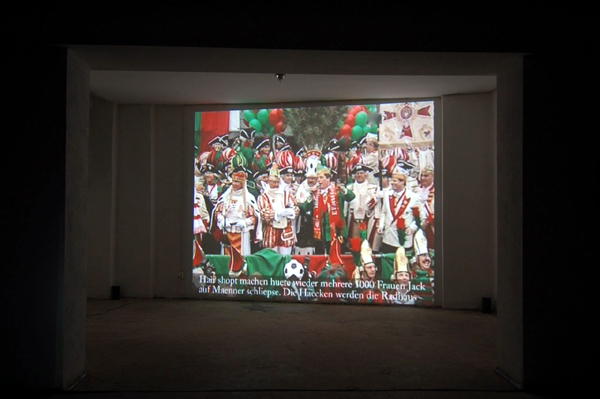
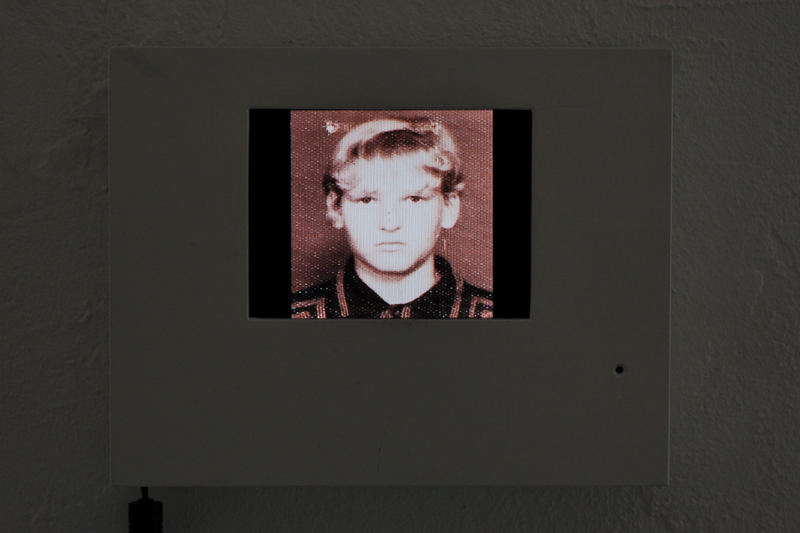
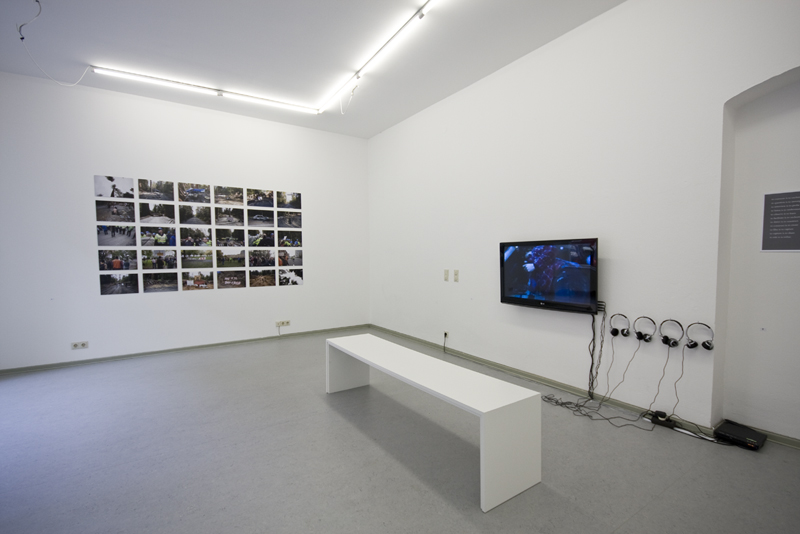
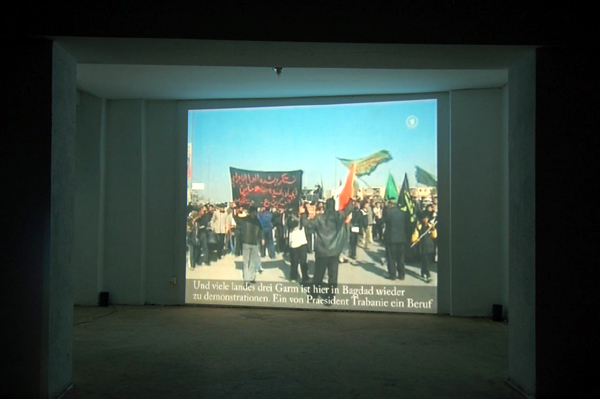
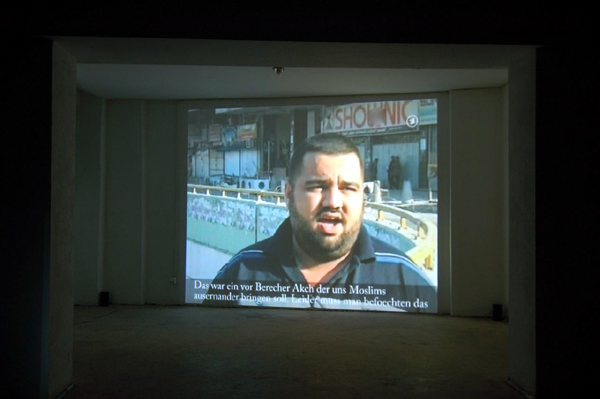
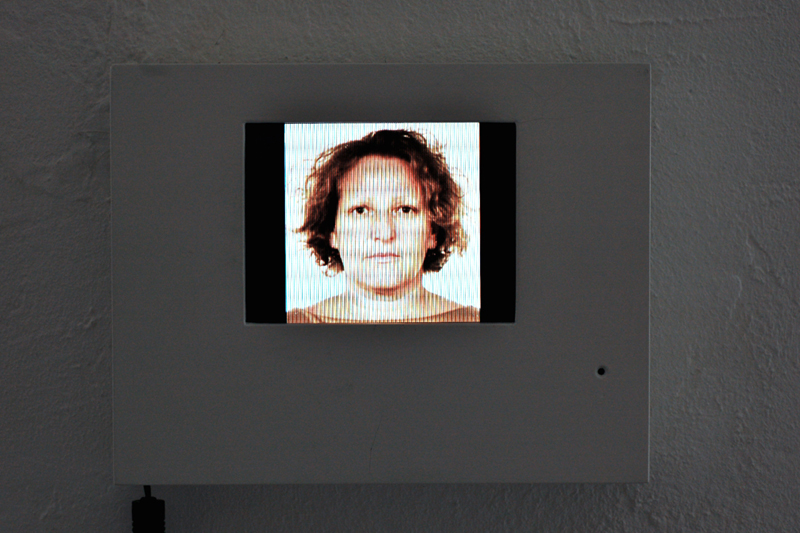
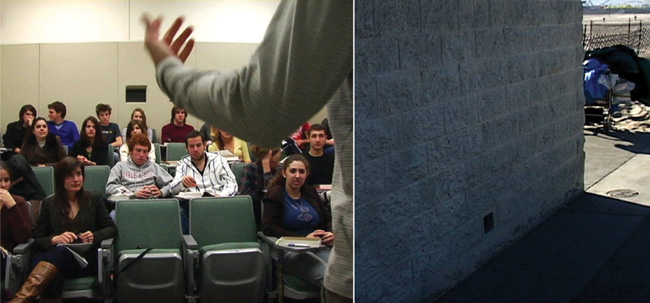
21–25 November 2008 FROM AMERICA – Videoworks by José Carlos Teixeira: It’s OK (united) #1 #2 #3 – three steps to a (r)evolution | Essay on Unsheltered Bodies Opening: Friday 21 November 2008, 8 pm. 22 to 25 November by appointment. José Carlos Teixeira (1977, Porto, Portugal) is an artist and fellow in residence, during one year, at the Akademie Schloss Solitude (Stuttgart, Germany), in Film-Video-New Media. He completed an MFA in Interdisciplinary Studio at the University of California Los Angeles (UCLA), after having studied at New York University (NYU) and at the University of the Basque Country in Bilbao. He got a BFA from the School of Fine Arts at the University of Porto. His interdisciplinary work is mostly focused on video, installation and performance; it deals with notions of language, identity, limit, exile and displacement, from a psychological to a more sociological or political point of view. Collaboration and participation are key elements in his work process and methodology. He has been involved in art projects, exhibitions, festivals and screenings in Europe (Portugal, Spain, France, Belgium, Germany, Scotland, Sweden, Russia, Cyprus), in the USA (New York, Los Angeles, Pasadena, Boston, Atlanta, Detroit, Tucson, Cincinnati), as well as in Brazil, Mozambique, Angola and São Tomé. He is represented in collections such as the Aberdeen Art Gallery Collection (Scotland, UK) and the PLMJ Foundation (Lisbon), and has received awards and grants including the Fulbright / Carmona e Costa Foundation Grant, the Gulbenkian Foundation / FLAD Grant, the Samuel Booth Award, the D’Arcy Hayman Award and UCLA Fellowships. He also studied music and experimental theatre, and collaborated extensively with the Serralves Museum of Contemporary Art (Porto). IT’S OK (UNITED) #1 #2 #3 – THREE STEPS TO A (R)EVOLUTION (2004–2006, 9:26) A video project that departs from a critical reflection on dominant educational, socio-cultural and political premises in the West. The case of the United States seemed the most meaningful – not only because it was then the country where the artist lived and worked, but also because of its paradigmatic and hegemonic nature. Originally the audiovisual component of a performance at the end of 2004, It’s OK (united) was born during trips by bus, metro and car through Los Angeles. The expression “It’s OK” marked a time and the artist’s early American experiences: a repetitive common saying that encapsulates paradoxes and contradictions – electoral results, the state of war, the lack of equality and freedom, everyday discrimination and mutual racism. It became a friendly and soothing expression, but also an ironic way of accepting it all, or of withdrawing from what one cannot control. Appropriating the American national anthem and using these writings as lyrics for such a symbolic music, the piece attempts to subvert the founding principles of attitudes taken as normal and positive. Playful, it questions beliefs and challenges ordinary perceptions of what Western culture defends as normalcy, correctness and assertiveness. As video-maker and performer, simultaneously conductor and teacher, the artist appeals to a learning that values uncertainty, doubt and loss against pre-assumptions such as success, safety or power. The work addresses globalization, migration, integration and the failure of democratic ideals, and enunciates an ethics not dissociated from aesthetics: the artist-author as a responsive and responsible cultural, social and political agent. Conception, production, image, edition and sound: José Carlos Teixeira. Original format: Mini-DV, NTSC, colour, 5:4, stereo. Los Angeles / USA. Support: UCLA Department of Art and Department of Film and Television; Lafayette Park (Los Angeles Department of Recreation and Parks); Crossroads School for Arts & Sciences and New Roads School, Santa Monica; Los Angeles Public Library. Special thanks to the five Hispanic kids and the two teenage classes who sang and recorded the project, and to Ron Athey, Allen Ruppersberg, Belinda Starkie, James Hosney, Brian Sanders and David Bryan. ESSAY ON UNSHELTERED BODIES (2007–2008, 10:45) “The limits are imaginary, except for walls... Frontiers are invented every day.” (from the video) In his practice, the artist examines language, identity, the boundaries of personal and social spaces, and the definition of physical and psychic territory, through collaboration and performance. Essay on Unsheltered Bodies is an artistic documentary project about placement and displacement in an expanding world, analysing boundaries and frontiers. The notion of homelessness is the poetically and conceptually charged point of departure. Based on footage from Los Angeles, the piece embraces ethnographic-anthropological strategies and tackles political issues around “unshelteredness” in a broader sense: the struggle to find a place in the world, and the dialectics between home and exile – physical, bodily, emotional or psychological. It brings together personal and collective elements of displacement, pain, loss and anxiety that may derive from a current human condition in increasingly unfair societies. “To talk about José Carlos Teixeira’s work is the same as talking about something that is alive, fascinates us, and makes us move. [...] These electric shadows are not telling stories. They speak about their experiences. [...] The Essay has an introduction, but has got no end.” – João Baeta Original format: Mini-DV, NTSC, colour, 5:4, stereo. Los Angeles / USA. Soundtrack: John Rose, Fence; Bleu (film soundtrack); Anonymous, Portuguese lullaby, 16th century; Lansing-Dreiden. Special thanks to Analia Saban, Melissa Manfull, Alejandro, Ana Rosa & Allan, and all the participants in the video.